Selecting premium textiles for high-end interior design requires balancing aesthetic refinement with measurable physical durability. When sourcing materials for custom furniture, such as the Sarelli Textiles collections of luxury italian fabrics, buyers must evaluate technical performance metrics alongside visual appeal. Understanding standardized abrasion tests allows designers to specify materials that will maintain structural integrity and surface texture through years of daily use.

What is a fabric rub count?
A fabric rub count serves as a standardized numerical measurement indicating exactly how many continuous friction cycles an upholstery material can withstand during laboratory testing before showing visible signs of wear, yarn breakage, or pile loss, which helps designers determine whether a specific textile suits decorative, residential, or heavy commercial applications.
Durability testing ensures that expensive textiles will perform adequately in real-world environments. Furniture pieces placed in high-traffic areas require fabrics with high abrasion resistance to prevent premature degradation. Without standardized testing, buyers would have no objective way to compare the longevity of a delicate silk velvet against a robust wool tweed.
The history and mechanics of the Martindale test
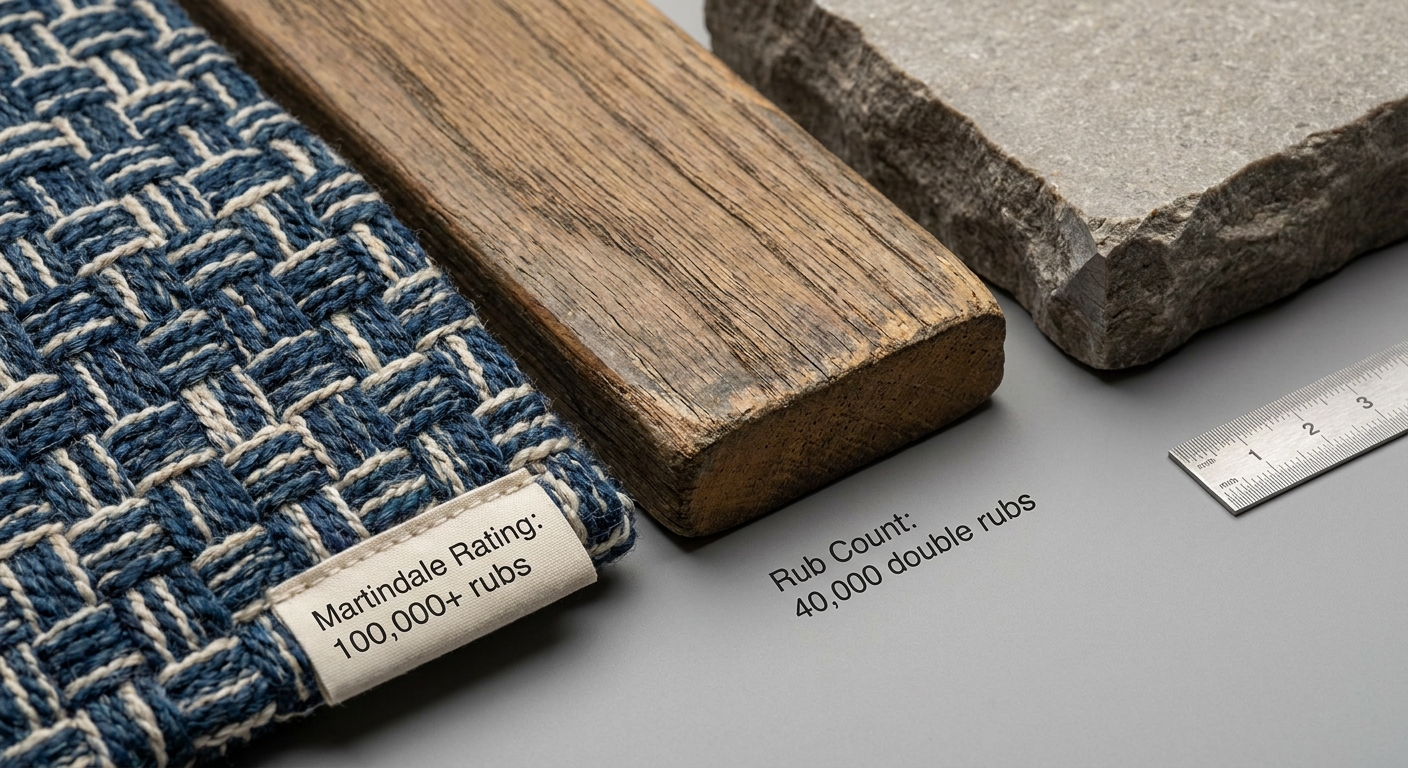
The Martindale test operates as an internationally recognized abrasion evaluation method developed in 1942 by James Graham Martindale to measure textile resilience through continuous multidirectional friction, wherein a machine rubs a worsted wool abradant against a target fabric sample in a complex oscillating pattern known as a Lissajous figure.
The Science Museum Group Collection notes that the original Martindale abrasion tester was created at the Wool Industries Research Association to test carbon-impregnated cloth intended for military use. Today, the modern Martindale apparatus evaluates fabrics according to the International Organization for Standardization guidelines, specifically the ISO 12947 protocol. During the Martindale evaluation, technicians cut a circular fabric sample measuring 38 millimeters in diameter and mount the sample onto a lower plate. A weighted upper plate on the testing machine applies 12 kilopascals of pressure for standard upholstery testing while moving the abradant across the fabric.
How technicians evaluate Martindale results
Laboratory technicians monitor the fabric sample at intervals of 5,000 cycles to check for structural failure. According to Wikipedia’s documentation on the Martindale unit, the test concludes when 2 distinct yarns break or when the fabric shows a specified degree of surface change. The final Martindale score represents the total number of friction cycles completed before structural failure occurs. A higher Martindale rating indicates greater resistance to surface wear, making the textile more appropriate for demanding environments.
Wyzenbeek versus Martindale ratings
While the Martindale method uses circular friction and serves as the primary standard in Europe, the Wyzenbeek test measures abrasion resistance through a linear back and forth motion and remains the dominant durability metric for upholstery fabrics evaluated and sold within the North American interior design market.

The Wyzenbeek testing protocol operates under the ASTM D4157 standard, which specifies the use of an oscillatory cylinder. During a Wyzenbeek test, a piece of cotton duck fabric or wire screen rubs against the stationary test specimen in both the warp and weft directions. A single complete back and forth motion counts as 1 double rub. Because the 2 testing machines apply mechanical stress differently, a high score on a Martindale machine does not automatically translate to a high score on a Wyzenbeek machine.
Choosing between testing standards
Fabric buyers must check which testing standard a manufacturer used before making purchasing decisions. European textile mills generally provide Martindale figures, whereas American distributors typically list Wyzenbeek double rubs. Attempting to convert a Martindale score directly into a Wyzenbeek score often leads to inaccurate durability assumptions, as the circular Lissajous figure motion stresses fibers in a fundamentally different manner than linear rubbing.
| Testing Method | Primary Region | Friction Motion | Abradant Material |
|---|---|---|---|
| Martindale (ISO 12947) | Europe | Circular (Lissajous figure) | Worsted wool or wire mesh |
| Wyzenbeek (ASTM D4157) | North America | Linear (Back and forth) | Cotton duck fabric or wire screen |
Interpreting rub count scores for luxury upholstery
Interpreting rub count scores requires matching the numerical rating to the intended furniture application, with residential upholstery typically needing 15,000 to 25,000 cycles and heavy commercial environments demanding 50,000 to 100,000 cycles to prevent premature fabric degradation under continuous daily use.
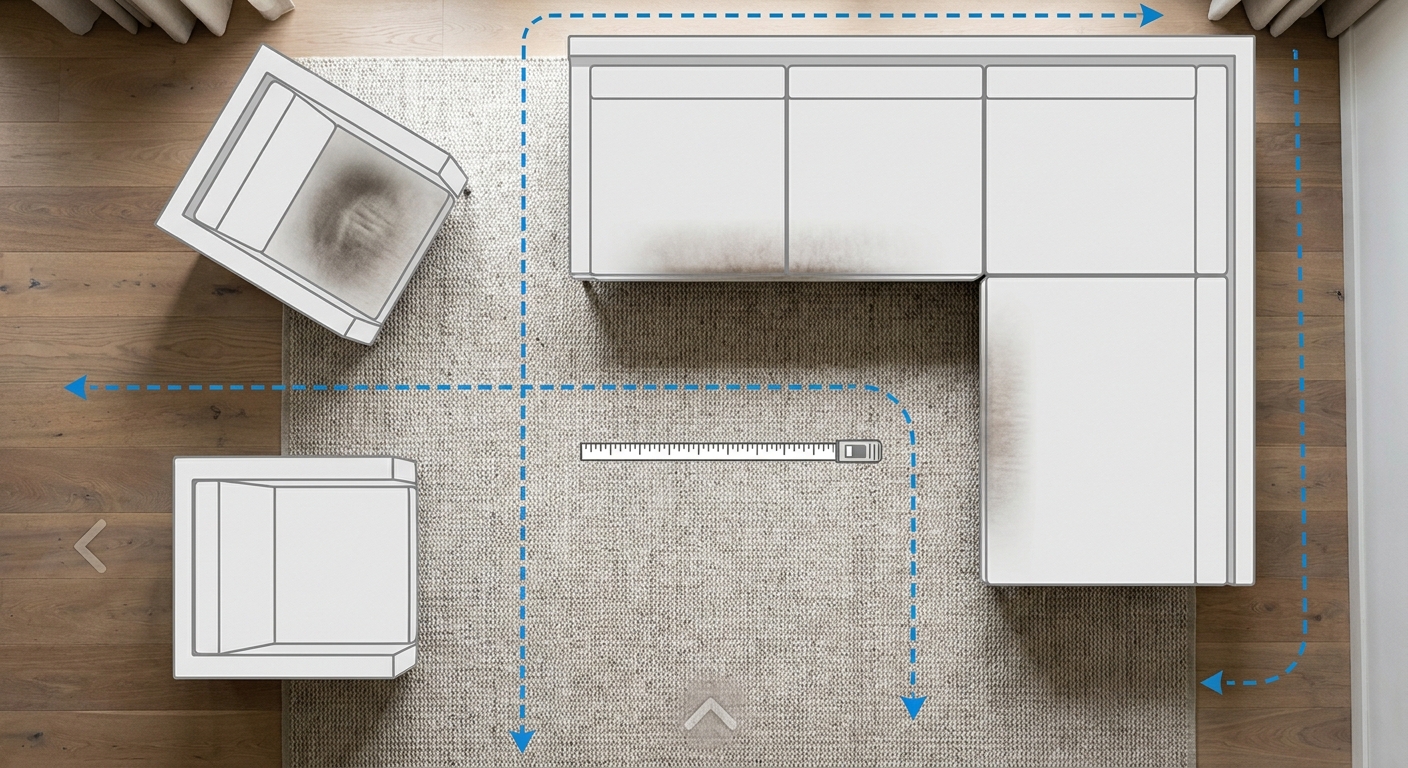
Luxury fabrics often prioritize delicate natural fibers, such as silk, linen, or fine wool, which naturally possess lower abrasion resistance than synthetic materials like nylon or polyester. Designers specifying luxury textiles must balance the tactile qualities of a fabric against the practical demands of the space. A formal living room sofa that receives occasional use can safely feature a fabric with a lower rub count, while a family room sectional requires a much higher numerical rating.
Standard durability thresholds for interior design
Industry guidelines categorize fabric durability into specific performance tiers based on testing results. Buyers should reference the following general thresholds when evaluating upholstery materials:
- Light duty: Fabrics scoring between 10,000 and 15,000 cycles suit decorative pillows, formal dining chairs, and occasional seating.
- Medium duty: Textiles reaching 15,000 to 25,000 cycles perform well on main household sofas and everyday residential furniture.
- Heavy duty: Materials achieving 25,000 to 30,000 cycles withstand rigorous use in active households with children or pets.
- Commercial grade: Upholstery exceeding 30,000 cycles meets the requirements for public spaces, hotels, and office environments, with some transit applications requiring over 100,000 cycles.
Related reading on this site
Readers comparing planning rules can also review Interior Design Suffering From Decorative Heavy And Light Fabrics And Most for adjacent context on the same site.
Material and proportion decisions connect closely with Meet Our Team, which gives readers another local reference point.
Project research can continue with About Us when the next question concerns a neighboring design topic.