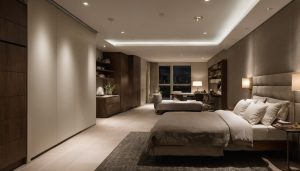
Which finish should sit behind the bed: inexpensive paint, expressive wallpaper, architectural timber or soft upholstery? The wrong question is which image looks best. An accent wall is an installed assembly, and its substrate, depth, junctions, maintenance and removal will outlast the first impression.
Which bedroom accent wall material is best for each practical priority?
Paint has the lowest complexity, wallpaper delivers pattern with little added depth, timber provides architectural relief, and upholstery offers tactile softness with possible sound absorption. Budget matters, but wall condition, cleaning, permanence and documented performance should decide the shortlist.
The material shortlist changes with budget, permanence and maintenance
| Material | Relative cost | Preparation | Build-up | Cleaning | Repair or removal | Fire documentation | Verified acoustic value |
|---|---|---|---|---|---|---|---|
| Paint | Lowest if the wall is sound | Fill, sand and prime | Negligible | Depends on product and sheen | Recoat or touch up | Product data | None |
| Wallpaper | Low to medium | Smooth, sealed substrate | Minimal | Construction-dependent | Seams complicate patches; removal varies | Product data where required | Usually negligible |
| Timber | Medium to high | Stable, level fixing base | Noticeable | Dust and wipe as specified | Replaceable pieces; fixing damage likely | Exact assembly report | Only if tested |
| Upholstery | Highest complexity | Templates, backing and service coordination | Greatest | Fabric-dependent | Modules simplify replacement | Complete assembly report | Absorption only if tested |
- Owner-occupied bedroom: choose for service life and repairability.
- Rental bedroom: prefer paint or demonstrably removable wallpaper.
- Children’s bedroom: prioritize washable, replaceable surfaces.
- Hospitality-style bedroom: demand cleaning and fire documentation.
Visual bedroom decor inspiration does not reveal installation risk
Photographs conceal cracks, adhesive residue, uneven corners and awkward outlet junctions. They also cannot prove acoustic performance. Sound absorption controls reflections inside a room; sound isolation limits transmission through the wall. The substrate and edges must therefore be inspected before any walls decor is ordered.
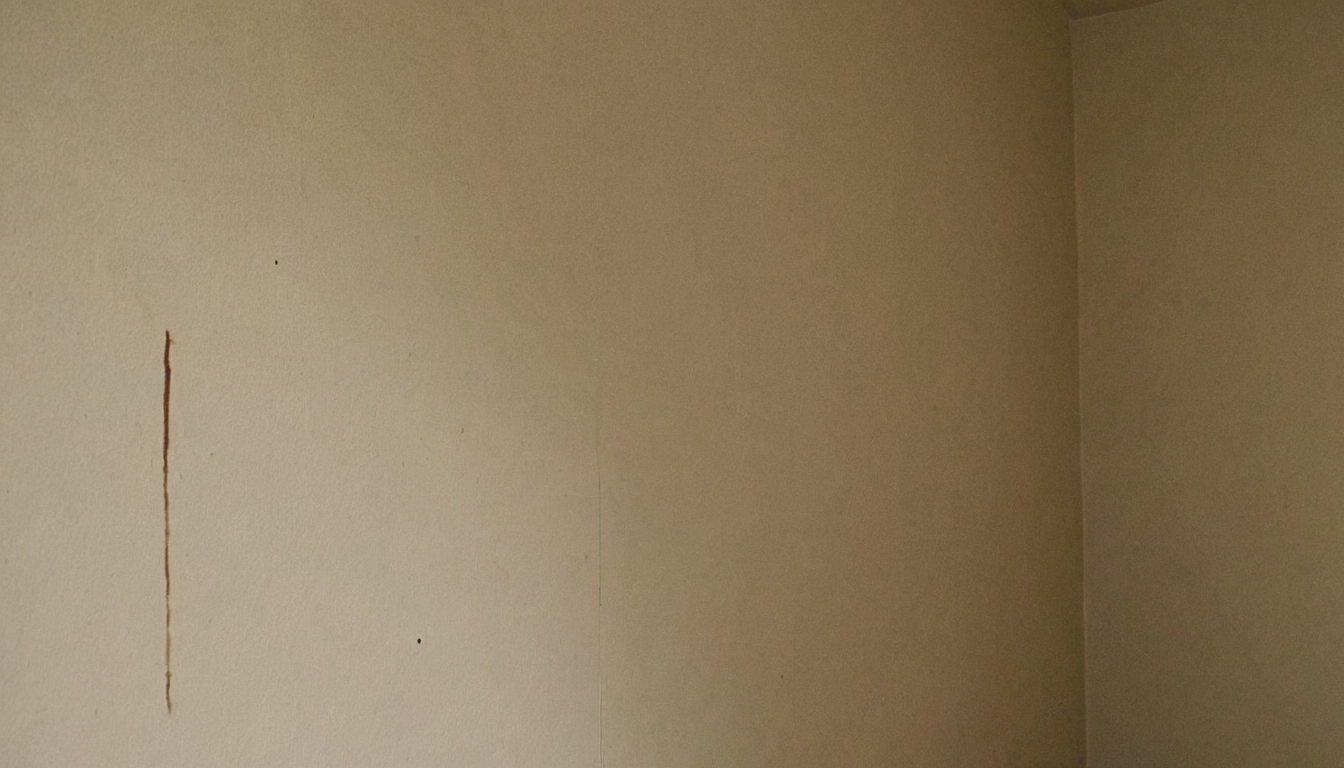
Which bedroom accent wall material is best for each practical priority shown with practical context cues.
Substrate condition and junction details determine whether a bedroom accent wall will perform
Every finish needs a dry, stable base. Paint and thin wallpaper reveal defects, while timber and upholstery conceal them by adding depth that must be resolved around skirting, ceilings, corners, furniture and electrical fittings.
How should the existing bedroom wall be surveyed before material selection?
Reject or correct the substrate before ordering if the survey finds:
- Active damp, condensation or mould. The EPA moisture guide advises fixing wet or damp areas promptly rather than covering them.
- Loose plaster, friable paint or coatings that detach under light scraping.
- Moving cracks, pronounced texture or unevenness that could distort seams or slat lines.
- Dust, grease, gloss coatings or old adhesive that could weaken adhesion.
Record substrate type, porosity and moisture condition, then check the selected manufacturer’s preparation and curing requirements.
Added wall depth must be detailed at every edge and electrical fitting
Draw the complete build-up before approving battens, backing, padding or trims. Confirm skirting returns, curtain movement and wardrobe doors. A licensed electrician should assess extensions to outlets, switches and wall lights under local rules. Because thick assemblies reduce usable space, check the bedroom’s furniture clearances.
Fire and indoor-air requirements apply to the complete installed assembly
Request fire evidence for the specified finish, adhesive, backing, foam and cavity arrangement. For U.S.-market chemicals, OSHA Section 1 SDS requirements cover product identification, recommended use, restrictions and supplier details. During work with VOC-emitting products, the EPA recommends increased ventilation. Once the substrate passes these checks, paint becomes the simplest test.
Paint is the simplest bedroom accent wall when the substrate is already sound
Paint suits budget-controlled wall accent ideas because it adds negligible depth and allows direct colour changes. That advantage disappears when texture, stains, cracks or damaged plaster require extensive filling, sanding, sealing and priming.
Paint sheen changes cleaning performance and defect visibility
Flat and matte finishes reduce reflections and disguise minor variation, but repeated wiping can mark less durable products. Eggshell and higher-sheen finishes generally tolerate cleaning better, yet raking light exposes roller texture and filler edges. Sheen names are not standardized, so compare technical sheets and published washability tests.
Children’s rooms and walls exposed to luggage or headboard contact need realistic cleaning and touch-up expectations. Test samples under the installed lighting. Where qualified products are suitable, ENERGY STAR reports that LED lighting uses at least 75 percent less energy and lasts up to 25 times longer than incandescent lighting.
Paint preparation can cost more than the finish coat
A quotation should separate protection, preparation, stain blocking, primer, finish coats, labour and disposal. The selected system’s technical sheets should govern coverage, coat count and curing time. Paint selection should also consider primer and filler emissions: the U.S. Environmental Protection Agency identifies paints and building materials as common indoor VOC sources. If full-wall resurfacing is already required, wallpaper becomes a credible pattern option.

Paint is the simplest bedroom accent wall when the substrate is already sound shown as an editorial planning reference.
Wallpaper delivers pattern efficiently but demands precise preparation and seam planning
Wallpaper is effective when pattern, texture or mural scale matters and the substrate can be made smooth. Performance depends on the facing, backing, adhesive, batch consistency, installer skill and stable room conditions.
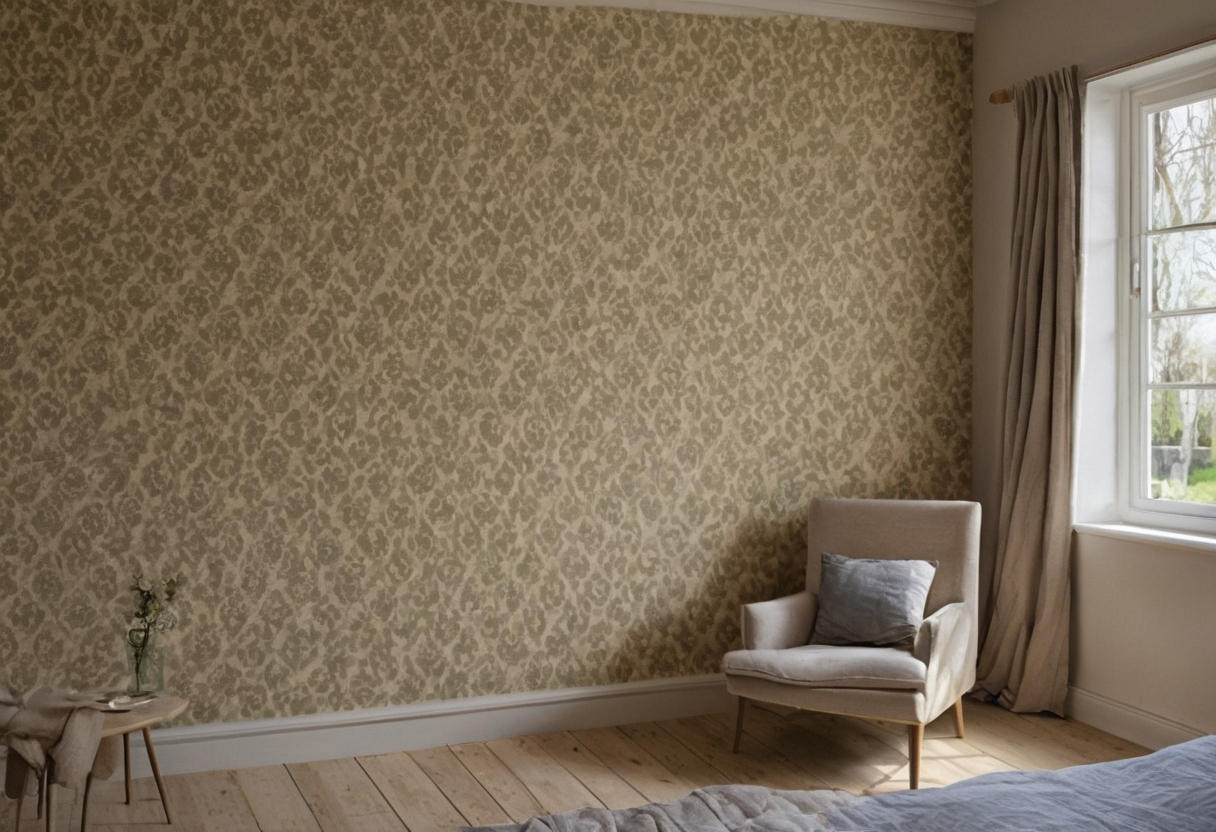
Wallpaper delivers pattern efficiently but demands precise preparation and seam planning shown as an editorial planning reference.
Wallpaper quantity depends on pattern repeat rather than wall area alone
Calculate quantity from roll width, usable length, pattern repeat and match type. Large repeats and half-drop matches create more offcuts. Confirm seam positions, order one batch or dye lot, and retain labelled spare lengths.
Washability and removability vary across wallpaper constructions
Non-woven, paper-backed vinyl, grasscloth and peel-and-stick products have different cleaning and removal behavior. Request written preparation, adhesive, cleaning and stripping instructions. A thin decorative layer is convenient; timber introduces a more permanent construction decision.
Timber accent walls provide depth and durability but require construction-level detailing
Timber works best as a permanent architectural finish. Solid boards, veneer, MDF slats and acoustic panels differ in movement, emissions, edges and fire performance.
Solid timber, veneer and composite slats are not interchangeable
Solid boards need manufacturer-specified acclimatization and movement gaps. Veneered sheets offer greater dimensional stability but require careful edge and batch planning. Composite slats need market-applicable emissions documentation. Specify battens, backing, trims, finish, waste, outlets and the fire classification for the exact mounting method.
Timber slat walls are not automatically acoustic treatments
Accept absorption claims only when laboratory data covers the same slats, backing, cavity and mounting condition. Decorative slats do not automatically soundproof a bedroom.
Timber removal can expose extensive fixing and adhesive damage
Mechanical modules may permit local replacement. Bonded panels can damage plaster or plasterboard paper, so quotations should include eventual substrate repair. Upholstery adds softness, but raises stricter cleaning and fire questions.
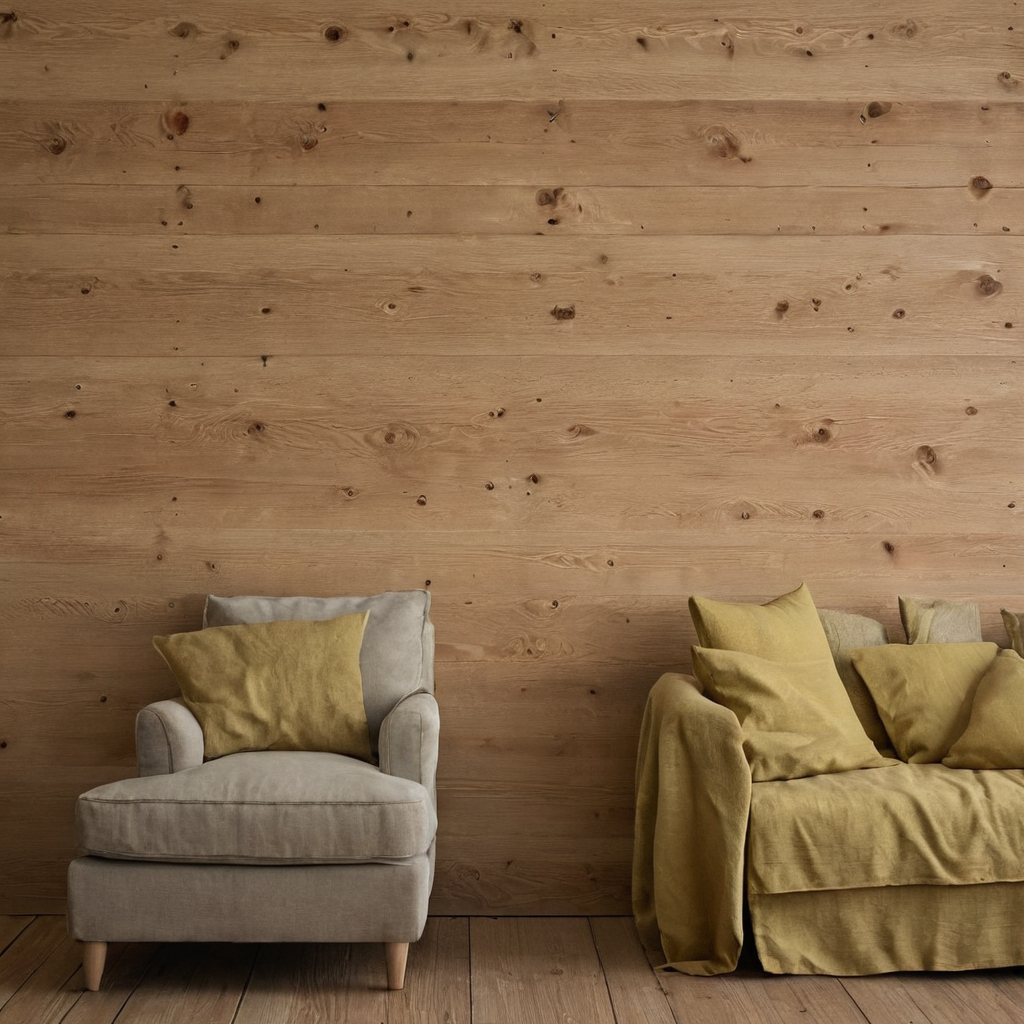
Timber accent walls provide depth and durability but require construction-level detailing shown with practical context cues.
Upholstered bedroom walls add softness only when fabric, padding and fire performance are specified together
Upholstered panels make sense where tactile softness or verified absorption justifies specialist fabrication. Fabric, padding, backing, fixings and fire evidence must be treated as one assembly.
Upholstery abrasion ratings do not prove that a wall fabric is easy to clean
Martindale and Wyzenbeek results describe wear under stated tests, not stain release, dust retention or fire compliance. Review how upholstery abrasion ratings are measured, then request composition, backing, cleaning instructions and warranty exclusions.
Upholstered panels can absorb sound but cannot be assumed to soundproof a bedroom
Porous padding may reduce reflections inside the room. Accept acoustic claims only when results identify the complete assembly, test method, frequency performance, mounting depth and air gap.
Panel modules make cleaning and replacement more manageable
Factory-made removable modules create visible joints but simplify outlet access and replacement. Site-upholstered walls reduce joints but make local repair harder. For U.S.-market adhesives and treatments, OSHA safety data sheet requirements require hazard identification and a clear statement where required information is unavailable.
Whole-life cost and project sequence should decide the final bedroom accent wall
The final choice should compare preparation, installation, maintenance and removal across the expected occupancy period. Material price alone is not a reliable procurement decision.
Installed quotations must include preparation, edges and electrical coordination
Ask installers to price the same wall condition and separate protection, preparation, materials, waste, trims, outlet alterations, labour, tax and disposal. Record room downtime, curing or acclimatization, minimum orders, spare material, removal and substrate restoration. For covered U.S. safety data sheets, OSHA Appendix D specifies required information under Sections 1 to 11 and 16.
The installation sequence protects finished bedroom surfaces
- Survey the wall, measure junctions and approve samples.
- Resolve moisture, cracks and unstable coatings.
- Complete outlet, switch and wall-light alterations.
- Allow specified drying, curing or acclimatization periods.
- Install the finish and inspect seams, edges, damage and outlet fit.
A sample panel should be approved under the bedroom’s actual lighting
Review a generous paint patch, several wallpaper drops or a representative timber or upholstery module in daylight and evening light. Place the sample beside the headboard, bedding, floor and bedside finishes.
- Confirm before commissioning: total budget, permanence and cleaning method.
- Verify assembly depth, fire documents and claimed acoustic evidence.
- Approve lead time, spare stock, removal scope and installer responsibility.
The strongest wall accent ideas become complete specifications before they become purchase orders.
Frequently asked questions
Which bedroom accent wall material is cheapest after preparation and installation?
Paint is usually the least expensive when the substrate is sound. Extensive plaster repair or stain blocking can narrow the difference, so compare installed quotations rather than container prices.
Can wallpaper, timber slats or upholstered panels cover a textured wall?
Wallpaper generally requires smoothing. Timber and upholstery may bridge texture with a suitable fixing base, but neither should conceal active damp, unstable coatings or structural movement.
Do upholstered panels or timber slat walls soundproof a bedroom?
No. Tested assemblies may absorb reflections within the room, but sound isolation through a wall requires a separate construction strategy.
Which accent wall finish is easiest to remove in a rental bedroom?
Repaintable paint is normally the lowest-risk choice. Removable wallpaper can work if its instructions suit the existing coating and a test patch confirms clean release.
What fire-performance documents should be requested for timber or upholstered panels?
Request a current report for the exact finish, backing, padding, adhesive, cavity and mounting arrangement required by the project jurisdiction. A certificate for one isolated component does not describe the complete installed wall.